Owens Delivers Key Victory for EPA Accountability in PERMIT Act
WASHINGTON, D.C. — The House passed the Water Quality Criteria Development and Transparency Act, legislation led by Congressman Burgess Owens (UT-04) to shine a light on the Environmental Protection Agency’s (EPA) opaque water quality standards process and restore accountability in environmental rulemaking.
Owens’ bill is part of the Promoting Efficient Review for Modern Infrastructure Today (PERMIT) Act, a comprehensive package of targeted, commonsense reforms to permitting processes under the Clean Water Act (CWA) that cuts red tape, reduces costly project delays and unnecessary litigation, and provides greater regulatory certainty for our nation’s infrastructure builders, energy producers, farmers, home builders, water utilities, small businesses, and more.
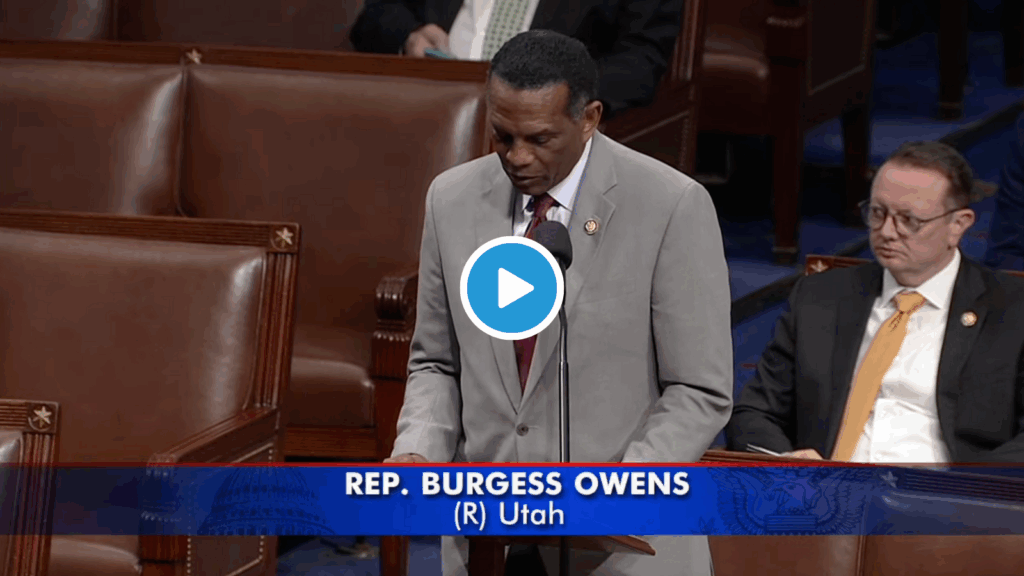
Click here or above to watch.
“The Biden EPA issued new water quality criteria with no transparency and no input from the farmers, families, and job creators who have to live with the consequences of these closed-door decisions,” said Rep. Owens. “Included in the PERMIT Act, my Water Quality Criteria Development and Transparency Act, is a commonsense fix to hold these unelected bureaucrats accountable and give Utahns, and stakeholders across the country, a real voice. I’m proud to see this package pass the House and will keep working with my Republican colleagues to cut red tape, restore accountability, and get America building again.”
The Water Quality Criteria Development and Transparency Act:
- Subjects EPA’s Section 304(a) water quality criteria to notice-and-comment rulemaking, ensuring that local communities, industries, and other stakeholders can meaningfully weigh in before new federal standards are adopted.
- Provides limited judicial review to protect against regulatory overreach and ensure EPA actions are legally sound and publicly justified.
The Promoting Efficient Review for Modern Infrastructure Today (PERMIT) Act:
- Improves transparency and opportunities for communities and the regulated community to participate in the development of reasonable regulatory criteria and processes
- Establishes commonsense limits to timelines for issuing permits and to judicial review processes to help prevent frivolous lawsuits
- Provides greater clarity and certainty to permit seekers and holders, so that they can more confidently comply with the CWA, know that permits granted to them won’t be pulled out from under them, and be shielded against legal action when they have complied with their permits in good faith
- Protects the regulated community from costly and overburdensome regulations that fail to consider whether technologies for compliance are even commercially available
- Clarifies the guardrails to ensure the CWA’s scope remains limited to water quality, eliminating the ability of some states to abuse the CWA to block projects for other unrelated reasons
- Eliminates duplicative regulatory requirements for the use of aerial fire retardants to fight wildfires and for the proper use of pesticides
- Directs the Army Corps of Engineers to address the large backlog of permit applications and determinations
###