Aug 5, 2026
Press
WASHINGTON — Higher Education and Workforce Development Subcommittee Chair Burgess Owens (UT-04) led a hearing on how Learning Employment Records (LERs) empower workers, expand opportunity, and build a transparent, skills-based talent marketplace.
Click here or above to watch.
Opening the hearing, Rep. Owens called for a shift away from the outdated “college-for-all” model and toward a more flexible, skills-first economy and highlighted the role of Workforce Pell Grants and short-term credential programs, enacted through the Working Families Tax Cuts package, as key building blocks for a modern skills economy.
Rep. Owens: “In today’s workforce, the hiring process is costly and extremely inefficient, especially when employers are looking for workers with specialized skills. For jobseekers, translating education, training, or life experience into terms employers understand can be daunting. In this era of innovation, including the power of AI, we need smarter ways to connect skills with jobs. Learning Employment Records are a game-changer. When paired with transparent credential registries and skills-based job descriptions, LERs can power a marketplace where ability, not pedigree, drives opportunity.”
Click here or above to watch.
Scott Pulsipher, President of Western Governors University (WGU), emphasized that education must be a pathway to opportunity, and that digital credentials play a critical role in helping learners communicate their verified skills.
Mr. Pulsipher: “WGU believes that education has to be a pathway to opportunity… One of the key challenges is that individuals want to ensure they’re ready with the knowledge, skill, and ability necessary for the job. With our LER and achievement wallet, learners can now see roles in their specific location they’re already qualified for… and even automate the way they apply for those jobs and surface their transcripts to employers.”
Click here or above to watch.
Greg DiDonato, Vice President of Business Development at EBSCO Information Services, shared lessons learned from pilot programs in Alabama and other states.
Mr. DiDonato:“Talent marketplaces can mean different things to different people. We need clear, targeted messaging for students, veterans, and employers about what this means to them. Partnerships are critical. This work doesn’t exist without collaboration. And we need long-term funding signals so that jobseekers and institutions know this is worth the investment. Lastly, we need big data to understand the cross-sector opportunities and evolve with speed.”
Click here or above to watch.
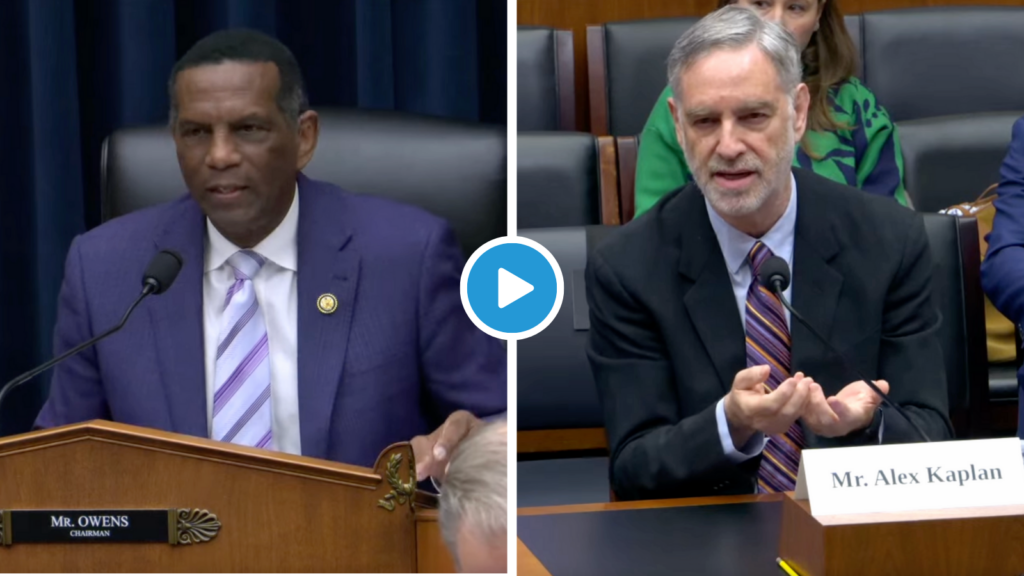
Alex Kaplan, advisor to the American Association of Collegiate Registrars and Admissions Officers, highlighted the importance of shared standards.
Mr. Kaplan: “LERs represent a common set of data around the skills and competencies individuals have accumulated…
If we can settle on common standards, we’ll enable learners to transfer that information to employers and institutions, making it easier to offer a job or admission based on verified data.”
The full hearing is available to watch here.
###